
< At-a-Glance Summaries
Date of Publication:
December 2025
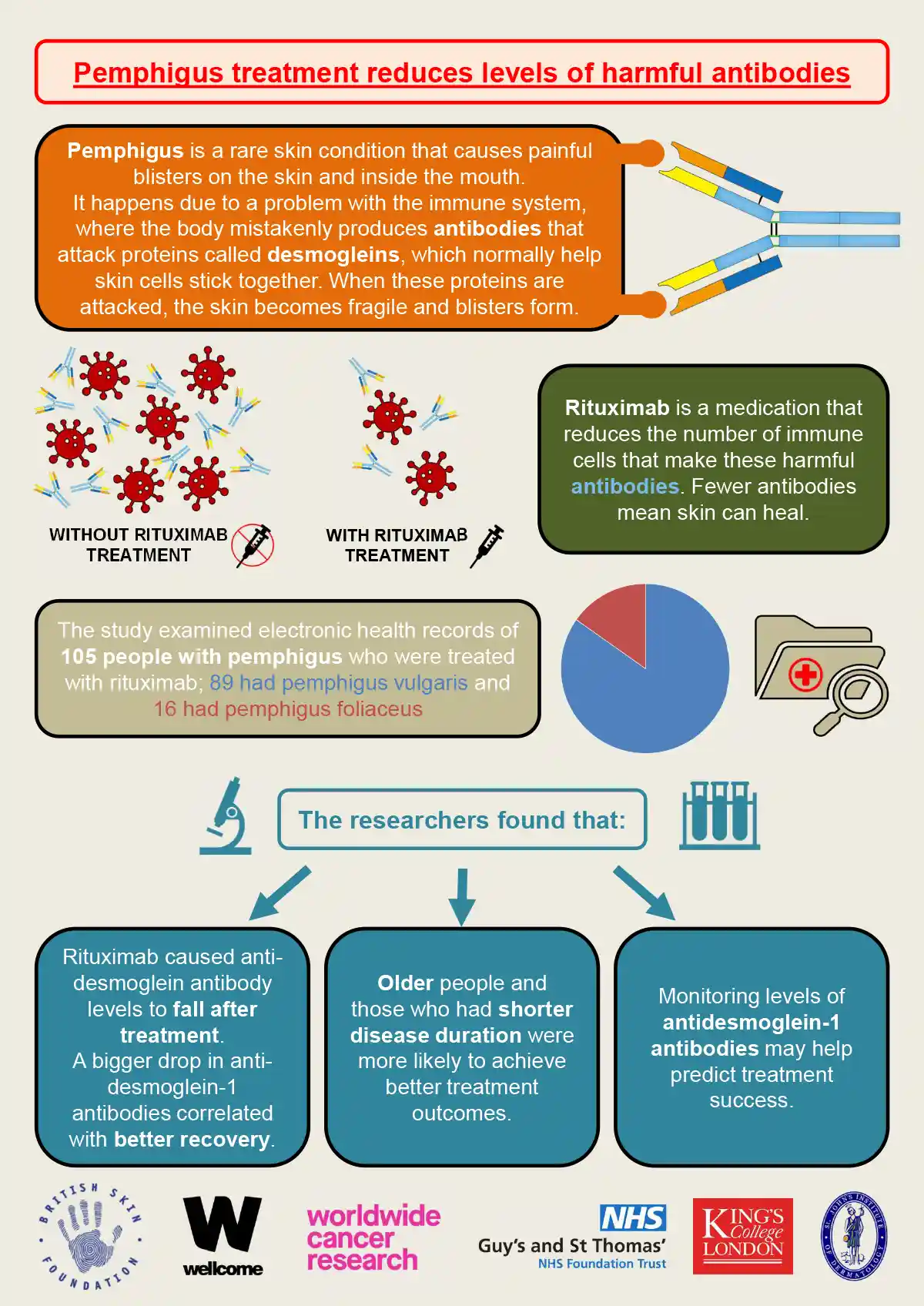
Pemphigus is a rare skin condition caused by a problem with the immune system that results in formation of painful blisters on the skin and inside the mouth. There are two main forms of pemphigus: pemphigus vulgaris and pemphigus foliaceus. In these conditions, the body mistakenly produces antibodies that attack proteins called desmogleins, which normally help skin cells stick together. When these proteins are attacked, the skin becomes fragile and blisters form.
Rituximab is a medication that works by reducing the number of certain immune cell types that produce these harmful antibodies targeting desmogleins. This study investigated how the immune system changes in people with pemphigus receiving rituximab treatment. Researchers wanted to better understand how these antibody levels change after treatment and whether these changes are linked to how well people with pemphigus recover.
They studied the electronic health records of 105 people with pemphigus who received rituximab. Of these, 89 had pemphigus vulgaris and 16 had pemphigus foliaceus. Scientists measured levels of the harmful antibodies against desmoglein-1 and desmoglein-3 before and after treatment and compared these results with clinical outcomes.
They found that:
- Overall, rituximab works well in both types of pemphigus. However, the way antibodies changed over time differed between the two conditions. In people with pemphigus vulgaris who had antibodies against desmoglein-1, these antibody levels dropped significantly after treatment. In contrast, the reduction was smaller in people with pemphigus foliaceus. This decrease mainly involved a specific antibody subtype (called IgG4) which is strongly linked to pemphigus severity.
- Older people and those who had shorter disease duration were more likely to achieve better treatment outcomes.
- Reduction in antibodies against desmoglein-1 was a stronger predictor of treatment success than reduction in antibodies against desmoglein-3. This suggests that monitoring levels of desmoglein-1 antibodies may help doctors better predict how well people with pemphigus will respond to rituximab therapy.
In summary, this study improves our understanding of how rituximab works in pemphigus. It shows that changes in specific antibodies, especially those targeting desmoglein-1, may help predict treatment outcomes and guide future management.
The full paper is available to read online here: https://doi.org/10.3389/fimmu.2025.1713987
Written by Vishvan Naidu
Authors:
Naidu V, Jain HA, Yalcinkaya A, et al
Journal:
Frontiers in Immunology
Link:
https://doi.org/10.3389/fimmu.2025.1713987
< At-a-Glance Summaries